


Tag: Strategy and Planning

  • How Nonprofits Should Evaluate Digital Ministry Success

    How Nonprofits Should Evaluate Digital Ministry Success

    Runners lined up along a starting line to begin a race

    Measuring success as a for-profit company is pretty straightforward. At the end of the day there should be, well, profit.

    But if your organization’s primary reason for existence isn’t to make money but to make change, how do you know you’re executing your strategy well? In this article, I’m going to outline a simple framework for measuring digital ministry success. This framework will help you think through what’s important and how you can measure progress.

    Ways to measure digital ministry success

    Hopefully, we can all agree that setting measures of success is important:

    • Numbers represent the individual lives impacted by the ministry and the work you do. That’s worth measuring and celebrating.
    • Measuring progress holds the ministry as a whole—as well as the individuals serving within the organization—accountable to the goal.
    • This accountability is part of stewarding donations well.

    Financials

    For-profit companies measure things like revenue and profit, while nonprofits tend to focus on donations. Organizations that rely on donations to operate can measure the number of individual donors, the average donation amount, the number of recurring donors, the frequency of donations, or the longevity of a supporter.

    The flip side of measuring the donations coming in is measuring the impact of those donations. How many people do you serve? How far can you stretch each dollar? How much is going to operating expenses?

    Interactions

    For digital ministry, interactions are an accessible measurement. For example, a broadcast ministry can measure the number of videos watched, audio sermons listened to, or articles read per user. Organizations can look at data such as the number of unique visitors to a site, their average time on the page, or their bounce rate. And others might measure how many visitors sign up for a user account or how frequently users visit the site.

    Progress through the user journey

    Another option is to measure progress through the user journey. Whether you have formalized the user journey using a tool such as a user journey map or simply have an idea of the steps your ideal user will take over time, use these milestones to measure progress through that journey.

    For example, EveryCampus launched a prayer walk app in 2020 with a short-term goal of covering every college campus in the United States with prayer and a long-term goal of establishing gospel communities on each one.

    For them, the user journey includes registering for a prayer walk, completing the prayer walk, continuing to pray for that college campus, becoming involved with campus ministry, and finally, leading a discipleship group on campus. Measuring how people move through each stage is an important part of evaluating your organization’s digital ministry success.

    So which should you measure?

    This is a sampling of the possibilities, not an exhaustive list by any means. But making it onto the list doesn’t mean it’s automatically the right thing to measure. Knowing what to collect is an important part of user research; knowing what to measure ensures you’re working toward executing your strategy well.

    For example, user sessions on your website or a board that’s happy because your site redesign was inexpensive might be easy to measure—and even look impressive at first glance—but they don’t necessarily point to success for your organization.

    A hand holding a lens with a clear image of an ocean island in the center of the lens

    A vision-based framework for digital ministry success

    Instead of starting by looking at the things you can easily measure, start with a vision-based framework. To measure success, you must unpack why your organization exists in the first place. This has probably already been summarized in your vision or mission statement. I prefer to start with the vision statement because it’s focused on the organization’s desired future.

    Breaking your vision statement down phrase by phrase helps you determine measurable outcomes for each phrase. This strategy works because it keeps a sharp focus on measuring what’s important. And it allows you to see where your ministry might be falling short in achieving that vision so you can create a strategy to improve. (Of course, if you find that you can’t measure the success of your vision statement, it might be worth redefining your vision to make it more concrete and measurable.)

    Let’s look at a couple of examples:

    InterVarsity Christian Fellowship

    Here is InterVarsity‘s vision statement. Even though it is aspirational and abstract, we can still use it to define and measure desired outcomes. I don’t know if these are the exact metrics they track, but I do know their digital strategy aligns well with their vision.

    The purpose of InterVarsity Christian Fellowship/USA
    is to establish and advance
    at colleges and universities
    witnessing communities of students and faculty
    who follow Jesus as Savior and Lord:
    growing in love for God,
    God’s Word,
    God’s people of every ethnicity and culture,
    and God’s purposes in the world.

    The first step is to break the vision down into phrases:

    The purpose of InterVarsity Christian Fellowship/USA
    is to establish and advance
    at colleges and universities

    This can be measured by audience size. That might include the number of schools with InterVarsity chapters, the number of staff, or the number of students InterVarsity serves.

    They can also measure traffic to a website or email subscribers, but those numbers alone don’t satisfy this vision statement. Instead, dig deeper. Are there effective calls to action that draw interested visitors into chapter involvement or even to establish a new chapter? Tracking those response rates is a good way to know.

    These are all measurable and are strong indicators that InterVarsity’s strategy is or isn’t working.

    Moving on to the next phrase…

    witnessing communities of students and faculty
    who follow Jesus as Savior and Lord

    This speaks of engagement. The audience is taking action by “witnessing” and “follow[ing].” Digging into periodic survey results can help measure this level of engagement, and they can also infer a bit by looking at performance metrics. Does the audience keep returning because of the value delivered? This can be measured through analytics such as logins and user sessions.

    growing in love for God,
    God’s Word,
    God’s people of every ethnicity and culture,
    and God’s purposes in the world.

    Growth can be facilitated in many ways: relationships, mentoring, education, resources, etc. The last two, education and resources, are straightforward to measure. Are they providing resources to facilitate growth? Is anyone reading that content? How long are they spending with it? Are lives being changed? Measuring this is a bit more subjective but can be done through additional surveys or user interviews and looking for ways to quantify those results (e.g., using the classic “on a scale of 1 to 5” type question).

    Compassion International

    Let’s step through another example. Compassion isn’t an Agathon client, but this is still a solid example because of how well their online presence supports their mission.

    Our mission is to release children from poverty in Jesus’ name.

    Short and sweet! If you look at Compassion’s site, the focus is on pairing sponsors with individual children. The results are measured by the number of sponsored children who are spared from the worst of poverty because their daily needs are subsidized by donors. They also can measure number of donors, total donations, and donor retention rate.

    Mercy Ships

    Here’s another short and sweet example from Mercy Ships:

    Mercy Ships uses hospital ships to transform lives and serve nations, one at a time.

    There are many metrics Mercy Ships can use to see how well they’re achieving this vision: number of nations served or number of patients or procedures. This work, of course, relies on donor support. In addition to tracking the donor metrics outlined above, they could also measure average amount spent per patient.

    A hand pointing to a line chart on a piece of paper

    Measurement leads to action

    While measurement is an important part of growth and stewardship, you shouldn’t be measuring for the sake of the data. Instead, measure the items you plan to take action on. That’s why I recommend tying your measurement to your vision. This offers assurance that you’re looking at the right things.

    But just as important as measuring is making a plan to improve and grow in each area. The action is what moves you closer to your goals and vision.

    Now it’s your turn!

    Go ahead and pull out your vision statement. Break it down into phrases. And brainstorm metrics for each one.

    I’m a big fan of the design sprint phrase, “How might we…?” to help with this part. As an example, “How might we measure constituent engagement?” Your answers will be different than my examples above because your organization is different. This is not a case where one size fits all!

    As you’re identifying areas to measure, keep looking back at your vision statement. The statement is the goal you’re working toward, and the things you’re measuring and setting goals around should support that vision.


  • Protect Your Ministry Work by Futureproofing Your Digital Strategy

    Protect Your Ministry Work by Futureproofing Your Digital Strategy

    Change is inevitable, and it can challenge your ministry’s focus on its digital strategy. Some change is cataclysmic—founders retire or funding dries up some years. Other change is less dramatic—key staff seek greener pastures or the landscape shifts around your ministry initiatives.

    Whether big or small, change threatens the work to discover, document, and pursue your organization’s digital strategy. How can you identify the risks? How can you help shore up your digital strategy in order to mitigate those risks? Let’s look at what happens when change comes to your ministry, and how “futureproofing” can ensure your digital strategy stays on track.

    What’s really at stake

    Your initial strategy process may be a full-fledged Discovery session or an informal series of conversations. Either way, it will produce some work that helps define your project’s purpose. This work might include user research, product roadmaps, personas, and other formal documents. Or you might only have a few decisions as to what the project is generally supposed to look like. Whether documents or decisions, what happens to your project’s direction when, say, a key leader at your ministry leaves?

    If you fail to protect that strategic work, it’s more likely to fall by the wayside when situations change. It might be overlooked by new leadership, lose its guiding force in keeping your project on task, or simply be lost. Any project that abandons its strategic goals is far more likely to end up in failure, either in execution or relevance. As such, losing this focus can deliver a critical blow to your project.

    What is “futureproofing”?

    Futureproofing simply means protecting something against future threats. It makes your work more robust by anticipating future challenges and designing a process to deal with them. Futureproofing works when you prepare your response in advance, rather than during a crisis when it is more difficult to make rational, measured decisions.

    Start by asking yourself the (rather morbid) question, “What happens to my work if I get hit by a bus?” When I was working in systems architecture, my tendency was to hold a lot of information in my head. It allowed me to move fast and spend time doing things rather than talking about the things I needed to do or documenting the things I’d already done.

    However, that approach didn’t prepare us for any major shifts in our organization. With new hires, we realized we didn’t have good documentation to show them how we do things. When I looked at taking some time off, we realized there were areas of our business where I was the only one who knew how everything worked.

    Preparing ourselves for my absence was an important start to maturing and protecting our organization. We realized I had to get all of that information into documentation and share responsibilities with others. We decided to futureproof our organization knowing that I will not be around forever.

    How futureproofing helps your ministry, partners, and staff

    Your ministry can only achieve its purpose if it continues to exist. To that end, futureproofing your digital strategy first and foremost ensures your organization’s long-term health and viability. That’s not to say futureproofing only helps your ministry as an organization. However, focusing initially on the organizational benefits will also make it easier to build consensus. Most of your ministry’s staff and donors have chosen to partner together because of a shared belief in the vision and work. They will want to invest in preserving your digital strategy precisely in order to preserve the ministry itself.

    Futureproofing also reduces personal anxiety among your ministry partners and staff during challenging times. Having organizational commitment to your digital strategy helps staff members know their work isn’t dependent on any one individual. It helps them know that restarting work after a disruption doesn’t mean they have to rework everything they’ve already done.

    Specific to your donors, futureproofing your digital strategy helps them understand the future of the work they’re funding. They can rest assured that their investment in your ministry’s work won’t evaporate at the first sight of uncertainty.

    What does futureproofing look like?

    For most organizations, the heart of futureproofing is communication. Communication is how you take knowledge out of your head and make it timeless. Communication is how you stop being a lone wolf and build teams. A few simple techniques will help futureproof your digital strategy to make it robust enough to weather most storms.

    Communicate early and often: get people involved

    In marketing, the “rule of seven” states consumers need to hear something at least seven times before they “get it”. (Of course, an older rule suggests it requires at least 77 times!) We all need to hear things more than we think in order to really absorb the message. You need frequent communication, both with leadership and staff, to continue offering reassurances that everyone is on the same page.

    Communicating early in your project life cycle also invites your ministry partners to share an investment in the digital strategy. One way Agathon practices this type of collaboration is by involving designers and developers throughout Discovery. These builders bring great value to make the process more robust by offering unique insights during this planning stage.

    It also lets them hear, firsthand, the strategic goals for the ministry. This helps protect against burnout or confusion when they’re months into the project and focused on “how” something is being done. They can look back on the early and frequent strategic communication, the “why” something is being done, and be assured of the purpose and direction they themselves helped establish.

    Communicate consistently and intentionally: schedule times to check-in

    In the heat of a project, it’s easy to get lost in the weeds and forget the overall roadmap and the goals you established. And despite involving ministry partners in the digital strategy, it’s important not to leave it up to them to let you know if their goals are changing. Rather, you must communicate intentionally and schedule times to step back and make sure you’re still on track.

    Communicating consistently and intentionally reinforces your commitment to the strategy and the people that make it happen. Agathon practices this by conducting regular project management meetings apart from any normal developer meetings or standups. This shows our clients that their strategy is important enough on its own to warrant its own space. It also gives us permission to step back from daily work to think about the bigger picture. We can revisit the roadmap we designed together at the start of the project.

    This sort of regular meeting ensures we’re continuing on the right track throughout the project’s life cycle. It also provides a framework to invite new staff and leaders into an existing, robust process for communicating that strategy.

    Use centralized communication

    The “when” and “how” of communication are not the only important factors in futureproofing your digital strategy; the “where” is also vital. Too often, we rely on Slack, phone calls, emails, and other similar communication channels to discuss strategy. These are fine for many purposes. But if you’re aiming to safeguard the strategic decisions that flow from those discussions, you have to move those decisions into a centralized communication tool.

    Agathon uses Confluence as a centralized tool to communicate internally and to our clients. New team members can get up to speed with a project’s purpose by reading through “always available” strategic documents. Current team members can refer back to those documents periodically to ensure tactical decisions support the strategy direction. And you can ensure your communication is, indeed, consistent without having to fish through old chat logs or archived emails.

    Hold on to the results with a loose grip

    I planted, Apollos watered, but God gave the growth
    1 Corinthians 3:6

    In the end, you can plan for nearly everything to mitigate the effects of change… but you can never be 100% sure of the results. Futureproofing your digital strategy is not about guaranteeing success; likewise, don’t assume failure if plans go through unexpected upheaval in the end. It’s up to you to plant the seeds, water the seedlings, feed the soil, and prune dead branches. But sometimes God has bigger changes in mind, so keep a loose grip on any expectation of a specific result after all of your planning.

    A better approach than making something perfect is to make it better than when you found it. Going back to when I worked in systems architecture, I often found a script or configuration that wasn’t working quite right. In those situations, I had to choose: make it perfect and document absolutely everything? Or make it better and document enough to hopefully give the next person a shot at understanding it. More often than not, I had to ensure the “perfect” was not the enemy of the “good” and prioritize my time accordingly.

    Similarly, futureproofing your digital strategy is not an “all or nothing” endeavor. Don’t insist on your vision, in its entirety, for your ministry’s digital strategy. Rather, build consensus with your team and work for the best outcome you can reasonably achieve. Plan for the worst, pray for the best, and work with the results you get, not the results you wish you had.


    Change rarely shows up at your doorstep without its friends: fear, uncertainty, and doubt. But often, hiding behind those visceral emotions, change also brings opportunity. The prospect of an organizational shift can serve as the catalyst to solidify your digital strategy and build consensus, for now and the future, to protect those plans. Your investment in futureproofing your digital strategy will make your organization better prepared to meet that (inevitable!) change with a clear path forward for continued ministry.

  • ‘re Building the App Your Users Actually Need

    ‘re Building the App Your Users Actually Need

    How do you know whether the app you’re building is the one your users need? This is a common challenge for organizations doing digital ministry. It’s easy to get caught up in your own excitement, what best serves internal stakeholders, or what users think they want. And those don’t always align with building what users truly need.

    Let’s take a look at how to conduct user research that actually answers this question and helps you build the right app with the right features.

    Step 1: Form a Hypothesis and Set a Goal

    Before you begin your user research, start by forming a hypothesis and setting a goal for your analysis. This provides a framework for all of the data and insights you collect along the way.

    A hypothesis gives you something to evaluate. Once you have a clear yes or no to that hypothesis, you can form a new one. On the other hand, performing research without a hypothesis will leave you constantly chasing the next bit of data.

    Along the way, you’ll probably come across other ideas to question and test. Those will pave the way for future hypotheses and goals. User research isn’t the goal; the goal is delivering user outcomes.

    Think of it this way: figuring out what your users need is a bit like putting a puzzle together. For most people, the first step in completing a puzzle is to hunt through the box to find all of the edge pieces. You use those pieces to assemble the frame. Then you continue working on the puzzle, one section at a time.

    Along the way, you set aside those that you don’t need for the area of the puzzle you’re currently working on. But as you complete one section, you’re able to turn your attention to other pieces you saw along the way to continue assembling a full picture.

    Let’s stick with this analogy for a bit and see how it applies to user research.

    [contentupgrade id=”2296″]

    How do you choose a hypothesis?

    First, you may be wondering how you’re supposed to choose a hypothesis in the first place. How do you know if your hypothesis is the right one?

    Don’t worry, we’ve all been there!

    The most important thing to remember is you just need to get started. Don’t let being afraid of choosing the wrong hypothesis hold you back from progress. Your first hypothesis might not be the best one, but if it helps you gather data and answer questions about your users needs, you’re on the right track. And that’s true even if your hypothesis is proven false.

    A typical UX hypothesis follows this layout:

    We believe (the change we want to introduce)… for (the users that this change is for)… will result in (the outcome we expect to have)…

    And here are a couple of examples:

    • We believe making the donation process feel more collaborativefor first-time donors will help new donors feel like they belong to something bigger.
    • We believe adding a social element to the donation process for recurring donorswill help them feel like they are a part of a team.
    • We believe moving the opt-in button higher on the pagefor website visitorswill make them more likely to sign up for the newsletter.

    As you can see, these don’t have to be super sophisticated or complicated. They’re simply educated guesses about things you can change to achieve a certain outcome so you can test to see if your gut feelings are correct.

    Step 2: Gather Data

    Not everything that can be counted counts, and not everything that counts can be counted.

    William Bruce Cameron

    It’s easy to get caught up in adding features to your product that you think your users need or want, without any data to back up those assumptions. Without research, we often overestimate the importance of some features while missing other user needs altogether.

    To figure out what your users truly need, there’s no way around the need for data. And there are two primary types of data we use in this process: qualitative data and quantitative data.

    Qualitative data via ethnographic research

    Qualitative data provides insights we can use to form our hypothesis for testing. Qualitative research is done through observation and interviews. Looking back at our puzzle analogy, this process is about hunting for the pieces we’ll use to form the frame—our hypothesis—before we can start assembling the interior of the puzzle. This type of research is focused on observing signals that offer some clue about the future.

    You might be wondering why we’re starting with this qualitative research rather than things like Google Analytics and surveys. This type of subjective research allows us to step back and listen to users so we can gain insights into their behavior. Those insights often lead us to a new or better hypothesis. And from there, we can test the hypothesis using objective tools such as a survey or tracking data.

    In other words, talking with real users—whether through individual interviews or larger focus groups—allows us to create hypotheses that can be validated across a larger sample.

    This is especially important for early research because it gives us a broad understanding of the motivations, desires, and pain points of our users. We can then narrow those down through additional quantitative research.

    Quantitative data via survey and tracking data

    On the other hand, quantitative data allows us to take the hypothesis we’ve built (i.e. the frame) and begin filling in a more complete picture. This type of research relies on surveys and tracking data—measurable metrics—so we can learn from observable events in the past.

    To start this process, begin with the tools and mechanisms you have in place already. This could include things like Google Analytics, a heat map on the site, survey tools, etc.

    Next, narrow down your research to what truly matters for evaluating your hypothesis. There are plenty of data points to choose from, and trying to include them all will make it harder to get a clear answer to your hypothesis. Look at the data for very specific behaviors and narrow down your questions to the ones that directly connect back to your hypothesis.

    Step 3: Evaluate the Data

    Here’s the tricky part when it comes to this type of research: It’s easy for us to layer our own assumptions, desires, or goals on top of the data to get the results we’re hoping for. To conduct rigorous research that truly helps you build the right thing, you have to start by assuming all data is suspect until it’s validated.

    It can be helpful to have a neutral third party walking alongside you during this process to bring objectivity to the analysis. But if you’re conducting the research on your own, here are some questions you should be asking along the way:

    What is the data telling us?

    Data itself doesn’t carry meaning; we have to interpret the meaning ourselves. And we do that by looking for the story behind the data. This is an opportunity to move from findings—the objective results that we can quantify—to insights that help the organization move forward.

    It’s important to note that findings might not have any implication for the organization at all. Just because we can observe it, doesn’t mean it’s important. Instead, we have to decide whether the finding merits our further attention. One way to determine the value of the objective data is to ask yourself two questions:

    1. Does the customer need it?
    2. Can we do it?

    If the answer to either of those is no, it’s not sustainable and should be set aside rather than pursuing it further.

    Does the data look like the goal?

    The next step, of course, is to consider whether the data and insights align with the hypothesis you’re testing. Do they confirm that you should continue on the current path, or is it time to pivot?

    But that’s not the only alignment you want to look for. You also need to consider whether the hypothesis is still aligned with your business objectives considering the data and insights you’ve gathered. If it doesn’t, it could mean that your hypothesis needs to change.

    Is the data pointing to a new path?

    If the insights do not support the current hypothesis, then what are they telling you? The key to good user research isn’t making your findings fit your hypothesis. You shouldn’t have to squint to make them align!

    Instead, be open to surprises. Being blindsided by something you didn’t see coming is really the beauty of this type of research. Surprises are good!

    Sure, they can be disruptive to the way that we think about the value of what we provide to those we’re serving. But truly, this is an opportunity to expose those things and discover gold nuggets along the way. And the sooner this is done, the sooner you can pivot—saving you time, money, and effort.

    Is there a conflict between qualitative and quantitative insights?

    This question is a bit misleading; there will almost always be conflict between these insights. The question is whether that conflict matters. Sometimes this happens because of human nature: people often express different values verbally than their behavior shows. Other times, the mechanism we use to gather the data (for example, leading questions) might be the source of the conflict.

    A conflict between qualitative and quantitative insights doesn’t mean anything is wrong. But it should prompt curiosity and a desire to identify the source of the conflict. If there’s not a clear opportunity to explore further, it’s okay to put a pin in it until a later date.

    Can I prove it?

    We start with a hypothesis: “Here’s what we think will happen. Here’s what we expect to learn.” From there, we gather data and findings. And then we create insights that can lead to decisions.

    Once we decide that a change or feature will move the needle, we can begin to set performance goals. (That’s where the HEART framework comes in.) And from there, we can look for ways to prove our theory in the real world.

    You won’t be able to prove all of your insights. And that doesn’t mean they’re not worth pursuing. But when you can prove them, it helps mitigate risk for your organization.


    There is no easy way to know what your users need. It’s not something that can be decided simply by brainstorming as a team or building a good app. Instead, it involves rigorous, incremental research to get to know your users and identify where their needs intersect with your organization’s capabilities. But this process is worth it because building what users truly need will enhance the longevity and fruitfulness of what you’ve built!

  • What COVID Means for the Future of Ministry

    What COVID Means for the Future of Ministry

    A photo inside an empty church with beautiful stained glass windows

    A year ago, COVID-19 was declared a worldwide pandemic. Schools, churches, and other organizations were shut down. Work moved online. And life as we knew it changed drastically.

    At the time, most of us thought we were looking at a few weeks—possibly a couple of months—of these shutdowns. As it became clear they would last much longer, churches and ministries realized they needed to adjust their approach. They needed to innovate in order to continue to advance their mission.

    Some did this quickly, moving services, small groups, and other initiatives online. Others took a little bit longer but eventually made the same changes.

    We’re starting to see some things return to normal in 2021. But technology has been changing our culture for many years—the pandemic simply accelerated those changes—and the trends we’ve seen over the past year will undoubtedly continue to impact your ministry moving forward.

    Let’s look at some of those trends and the lessons they hold for churches and ministries in the future.

    COVID-19 Presented Challenges for Ministries

    And let us consider how to stir up one another to love and good works, not neglecting to meet together, as is the habit of some, but encouraging one another, and all the more as you see the Day drawing near.

    Hebrews 10:24-25 (ESV)

    Ministry is relational and traditionally happens face-to-face: Missionaries live and work among the communities they serve. Churches meet together for worship and prayer and fellowship. Faith is strengthened through relationship with other believers.

    When state and local governments responded to the pandemic with limits on in-person gatherings—and many individuals and families chose to stay home—it impacted ministries of all shapes and sizes. They had to figure out what connection and service might look like without being able to gather physically in the same space.

    Similarly, and perhaps even more urgently, organizations had to adjust abruptly to the need to work remotely. Like for-profit companies, they had to navigate the waters around remote communication, video meetings, and working with kids underfoot.

    When your staff is suddenly working remotely, your in-person conferences have been canceled, and gatherings are limited to a handful of people, how do you stay connected? How do you fuel genuine relationships without face-to-face interaction? How do you keep people from slipping through the cracks?

    Churches, ministries, and other nonprofit organizations faced these challenges and more throughout 2020.

    A photo of a laptop screen with a Zoom call open

    But It Also Presented Opportunities

    While it’s easy to focus on the restrictions and challenges around COVID-19, these also presented opportunities. Internally, we often say “constraints fuel creativity.” With the disruption of all that was familiar, and a limited number of options remaining, organizations were forced to think outside of the box. They needed to innovate to continue connecting with their staff, their donors, and the individuals they serve.

    Live streaming

    Live streaming is not a new concept, and many churches were already streaming their services online before the pandemic. But stay-at-home orders meant more people were looking for an online service to attend each weekend.

    In fact, in the early days of the pandemic especially, we knew people who listened to multiple services or “visited” new churches each week. We’ve seen churches cite online attendance stats that outpace what they saw during in-person services pre-pandemic. And churches have had a unique opportunity to reach individuals and families who were not comfortable visiting church in-person or who lived well outside of their geographic area.

    In a season of uncertainty, fear, and loneliness, the availability of online teaching and worship presented a beacon of hope for many people.

    Small group gatherings

    Campus ministries like InterVarsity and Cru suddenly saw all their students sent home for online learning, disrupting their small groups and Bible studies mid-semester.

    The restrictions didn’t just impact campus ministries, though. Bible Study Fellowship had been reluctant to embrace an online platform, focusing their ministry on in-person gatherings instead. But they found themselves needing to pivot in March of 2020 to move their classes online. This allowed them to finish out the 2019-2020 year online. It also provided an opportunity for groups to meet in-person or online for the 2020-2021 year, depending on local restrictions.

    Along with just about every other organization in the world, small groups, Bible studies, youth group, and more moved to platforms like Zoom. While no one would claim it was ideal as the sole mode of communication, it provided a way for these groups to continue to meet “face-to-face” at a time when people needed connection and encouragement most.

    Online events

    Conferences such as Bayside Church’s Thrive Leadership Conference went virtual in the summer of 2020. Organizers recorded sessions via Zoom and uploaded those for participants to enjoy at home or in small group settings.

    On the other hand, If:Gathering has always been a virtual event, encouraging women to gather groups of friends in their homes or churches to watch the livestream together. Last month, If:Gathering 2021 continued much the same as it always has, with more of a focus on individual viewers. With a strong social media presence to enhance individual online viewing, they’re clearly leading the way in this type of event.

    More robust digital communication

    Facebook groups, email newsletters, and text updates aren’t new. But the pandemic provided the impetus many churches and organizations needed to adopt these tools “now” rather than “someday.”

    With the limitations introduced by COVID-19, many organizations moved their communication away from paper bulletins and bulk mailing to digital communication instead. Email, social media, and text can help churches and ministries connect with congregants and donors in real time, across geography, and with more personalization.

    Online giving

    In March and April of last year, churches and ministries saw a sharp drop in giving. Based on trends we’ve seen during previous economic downturns, many organizations prepared for the worst. Surprisingly, by June, giving had returned to its previous level or increased for two-thirds of all churches and ministries. This giving was fueled by the ease of digital giving, the growing needs in our communities, and stimulus checks.

    A photo of a young man with sleeve tattoos looking thoughtfully at his phone

    What This Means for You Moving Forward

    As life continues to return to normal, your organization will have to figure out which of these tools and strategies will remain part of your ministry toolbox and which will be discarded as you return to more traditional approaches. These things aren’t going to stop being important, even once things return to normal. COVID shone a light on the role of digital ministry within your broader mission.

    Using digital media to enhance in-person events

    Incorporating digital resources into physical events is not new. EveryCampus launched an online app as part of their campaign to cover every campus in the U.S. in prayer. The app included a digital guide participants could use while they prayer walked their way around campus. (In 2020, they shifted to digital prayer walks.)

    Churches and other ministries can enhance in-person events with technology. This includes things like incorporating church prayer chains into your mobile app, setting up digital kiosks in place of weekly bulletins, or connecting with conference attendees on social media. Facebook groups, weekly newsletters, and video messages are all ways your organization can use digital communication to strengthen relationships.

    Meeting people where they’re at

    Many church communities are anxious to return to in-person services. At the same time they’re also juggling concerns about the risks presented by these gatherings. And the newly developed online communities still provide a valuable avenue to ministry.

    For those who are not able to return to in-person service (for myriad reasons, whether it’s concerns about COVID or being otherwise housebound), virtual services with online chat options have provided a way for them to stay connected to their congregation on Sundays.

    And still other churches have built thriving digital ministries. Restore Community Church in Kansas City is an example of this. Seeing the fruit from their online services, they recently hired a digital pastor to continue to lead this area of ministry even as they return to in-person services

    Don’t forget accessibility

    In the early days of the pandemic, your first priority may have simply been getting things online. Accessibility might not have been on your radar as you scrambled to get something in place. But, there’s no excuse for overlooking accessibility concerns at this stage. At its core, paying attention to accessibility is a way to care for people. It doesn’t just benefit those with disabilities or unique needs; accessibility makes the internet better as a whole.

    Online giving is a necessity

    In 2021, there’s no reason your church or organization shouldn’t be able to accept credit cards through your website, app, or even text. This means making the process easy and seamless and offering a full range of transactions such as automatic recurring donations. While the idea seemed foreign 15-20 years ago, digital transactions have become a normal way of life thanks to apps like Venmo, CashApp, and Zelle. Supporters expect the same ease of giving for their tithes and donations.


    We continue to look forward to the day that life returns to normal. But even as that happens, digital engagement is only going to get more important. 2020 was a year of connecting with friends, family, and organizations using digital tools. Those same tools and strategies can continue to enhance in-person interactions. Now’s the time to take all you’ve learned this past year and build on it to create a well-rounded, robust ministry in the future!

  • What Your Ministry Needs to Know About Leveraging User Research Data

    What Your Ministry Needs to Know About Leveraging User Research Data

    “How do I turn all my ministry’s raw data into something usable? How do I organize and store it? Do I need to be able to refer back to it once my user research is complete?”

    We’re going to answer these questions and more. But we have two caveats:

    1. We’re going to assume you already understand and believe user research is important. It is.
    2. We’re not going to talk about how to conduct user research; that’s another topic for another blog post.

    We begin every client project with a strategy process that involves discovery, user research, and other information-generating exercises. That might include persona development, user interviews, or a variety of other tools that help us—and you—learn more about your organization’s users. 

    As the field of user research has grown, many organizations find themselves conducting this type of research without a clear plan for what they should do with all the data they gather. Don’t let essential insights about your ministry go to waste. Read on for strategies to prepare for user research and leverage the data effectively afterward.

    How to Prepare for User Research

    As with anything in life, preparation can save you time and prevent headaches down the road. (Chefs refer to this as “mise en place” or “everything in its place”).

    There are steps you should take before you conduct your first interview or send your first survey to your ministry’s constituents:

    Know Why You’re Doing User Research

    “Getting to know your users” might seem like a good reason to conduct user research. But it’s important to drill down to figure out what you’re really hoping to find out. 

    • Why do you need to get to know your users? 
    • Is it to help you refine the vision and mission of your organization? 
    • To identify ways you could be better serving them? 
    • To understand what they’re looking for from your app or website?

    Drilling down this way provides concrete goals for your user research. That’s important. It will also guide the type of data you’re collecting as well as how you organize and store it.

    Decide What Data You’re Collecting

    Which brings us to the next step. There are dozens of things you might want to know about your users. Identifying the main purpose of your research helps you decide which data is most important—and which data is not important—in helping you answer that question. 

    • Are you looking for demographic data to inform future brainstorming? 
    • Do you want to understand how users interact with your current website or app? 
    • Are you considering a new project and need to better understand your users’ needs?

    Understand the Legal Implications of Collecting, Sharing, and Storing Data

    Just as the law requires websites and apps to have a public privacy policy for users to review, the data you’re collecting, sharing, and storing also has legal implications. You should always have informed consent before you begin a research session.

    For example, you should ask permission before recording a video, whether it’s a user interview or a screen capture. You should give participants a clear idea of what data is being collected and how it is stored and/or shared. And if you promise anonymity, you must ensure the data is truly anonymized.

    Have a Plan for How You Will Organize and Store Gathered Data

    Once you know what data you will be collecting, it’s time to decide how you’ll organize that data. We’ll talk more about user research repositories later. But start thinking about what makes the most sense for organizing this data now.

    • Do you need a folder of interview recordings and transcripts? 
    • A spreadsheet containing the data collected? 
    • Screen recordings or scanned post-it notes?

    By default, you might be tempted to save everything just in case someone wants to reference it in the future. And it’s okay to keep the raw data in an archive. Additionally, curating the data will make it more accessible and useful so people on your team not only can access it but actually will use it.

    [contentupgrade id=”2243″]

    How to Work with Data as You’re Conducting User Research

    One of the biggest roadblocks to organizing your user research is waiting until the research is complete to try to organize it. Not only can that be overwhelming, but you’re also likely to forget details that provide important context for the data, decreasing its usefulness. Try these tips to keep your ministry’s data clean from the get-go:

    Organize Data as You Go

    You also want to record any important details that may not show up in the raw data. If you’re conducting user interviews, for example, make notes about your impressions of the conversation immediately after it ends. Have the conversation transcribed and review the transcript for anything that needs clarification in its written format. You might even include notes about any updates you have recently made to your app or what’s happening in the broader world at the time you’re conducting the research, since those things can also impact how people respond.

    Analyze the Data

    Similarly, don’t wait until you have 1,000 user sessions recorded before you begin analyzing the data. Instead, look for patterns early. Note the things that stand out and what that means for your ministry along the way. You’ll have time to refine these insights later— before presenting them to the rest of your organization—but analyzing early and often ensures you don’t miss key insights due to the amount of data you need to wade through or the time that has passed.

    Identify Key Insights from Your User Research

    While this may seem obvious, make sure your research plan includes the time you need to identify and summarize key insights from your research before filing it away. It’s easy to consider the research complete as soon as the last interview or session is finished, especially if you’ve been analyzing the data throughout the process. But don’t skip this step, even if you aren’t preparing a formal report for anyone else. 

    • What have you learned about your users’ needs? 
    • What actions can you take based on these insights? 
    • What actions should you take considering the impact and time required?

    Communicate the Findings

    Finally, when communicating your findings with other team members or stakeholders, look for ways to make the data digestible. Rather than giving them the raw data and expecting them to wade through it as analysts, highlight trends, key insights, and your recommendations. Add screenshots or other visuals and, where appropriate, incorporate quotes or video clips to highlight your users’ own words.

    What to Do with Your Data after User Research is Complete

    Okay, you’ve completed your research, compiled your data, and presented your findings to stakeholders in your organization. Here’s what you should do with all of your ministry’s research:

    Label Your Files for Future Accessibility

    Label everything—whether it’s raw data or your final presentation—with dates, names (unless it’s anonymous, of course), and any other relevant information, such as the type of research, the research question, or whether action was taken. Follow the same naming conventions across all of your research to make it easier to refer back to in the future.

    Set an Expiration Date for the Data

    You don’t need to keep data indefinitely. Keeping all of your data means more for someone to wade through when looking for relevant information. It can also contribute to poor decision making in the future based on out-of-date research.

    Instead, decide how long you’ll keep raw data. Then, clearly mark your summaries and presentations with the date the research was completed (and even an expiration date).

    Make a Plan for Proper Data Disposal

    Digital data is a lot easier to dispose of than physical data. However, simply dragging it to a “Trash” folder may or may not be enough. This is especially true if you have not anonymized the data, in which case you’ll want to be sure it’s been permanently deleted from both the cloud and any local environments.

    It’s worth pointing out that this is a lot easier to do if you’ve followed the best practices above—organizing and labeling your data in ways that makes it easy to see what is what and how long ago it was collected.

    Tools for Organizing and Storing Your User Research

    Okay, we’ve convinced you that you need a plan for organizing and storing your data. But practically, what does that look like? There are many solutions to choose from. A lot will depend on the specific type of research you’re doing, how often you’re doing research, and how members of your team will be using the data. But let’s look at three general options:

    Cloud Storage

    Using a generic service such as Google Drive or Dropbox might be enough, especially if your team is already using these services as part of your tech stack. However, these tools require you to have a bit more organizational skill in order to create a system from scratch.

    Advanced Organizational Apps

    More advanced solutions such as Coda and Airtable take this cloud-based storage a step further. They provide customizable spreadsheets, documents, and databases that allow teams to collaborate, utilize, and store their data.

    User Research Repositories

    Finally, for an organization that is doing research on a regular basis, there are user research repositories such as Aurelius and Dovetail. These have been created with user research in mind. However, the cost of investing in these tools might not make sense if user research is an occasional part of your process, to be completed and then set aside until the next big project. But if you’re researching new features, running surveys, and conducting user interviews regularly, these tools might be worth the investment.

    Get the Most from Your Ministry’s User Research

    We all agree user research is important. But it’s not enough to just throw out a survey or conduct a couple of interviews. Instead, you need to plan ahead for how you’ll collect, organize, analyze, share, store, and dispose of that data. Otherwise, you’ll be missing opportunities to fully benefit from the research.

  • How to Pitch a Comprehensive Strategy to a Reluctant Board

    How to Pitch a Comprehensive Strategy to a Reluctant Board

    Most projects don’t require board level or top leadership approval. When they do, it’s because they’re ambitious and require strategic decisions and/or exceptional funding. And because the stakes are high, boards can be cautious or downright reluctant to proceed. Let’s talk about how to get past this reluctance to approval because chances are you’ve been approaching it wrong.

    It’s not actually a pitch.

    Although it may feel like it, your job isn’t to convince or pitch the board (or leadership team, or steering committee, etc.) on the merits of your project. This isn’t some presentation out of Mad Men with a slick dog and pony show to make those in the room swoon. Your job is to provide the board with the information they need in order to give support and fund your project. You already share the same mission and are talking together about how to achieve it. This realization changes how we prepare and what we say. Polish and pretty slides are less important than preparation and honest dialogue. Help board members truly understand so they can give their complete backing.

    I used to referee youth soccer and during our training we were advised how to talk with a problem coach or parent. Instead of walking right up to them, we were encouraged to come stand beside them, facing forward and leaning in slightly. This communicated to the coach or parent that we weren’t adversaries, but rather partners playing for the same team. When you’re working with your board, you’re all partners playing for the same team as well. I just love this posture of standing shoulder to shoulder looking the same direction, even metaphorically. It communicates we’re working together.

    Step into their shoes.

    Non-profit boards tend to be comprised of members who’ve been successful in their careers or ministry over a long period of time. They didn’t grow up as digital natives, but they have been living with glass interfaces for decades, and although they don’t “make tech things”, they certainly understand why it matters for their future. They see the changing world around them and recognize how vital it is to adapt. The board knows they need to lean on experts to help them understand the importance and consequences of the decisions they’re being asked to make. That’s why you’re here! They’re relying on you to clearly explain and guide them to take responsible—sometimes bold—investments into their future.

    So how do you guide instead of pitch?

    Explain the impact.

    Keep your eye on what's ultimately important.

    Everyone in the room shares this in common: we want to see ministry multiplied. The differences surface when we talk about how to accomplish ministry because saying yes to one project means saying no to others. Budgets are a zero sum game after all; investing in one area means less to go around for others. Why will this project make a bigger impact than all other options? Exactly how will it move the needle? Spell it out for them, and explain how it fits into their bigger comprehensive strategy.

    Boards need to see the big picture of how it unfolds in specific, concrete ways, so they become excited and support the work.

    Talk about money.

    Speaking of budgets, you may be familiar with the story from the New Testament of the Parable of the Talents. In that account, Jesus speaks of the importance of investing the resources entrusted to us. It’s not just a case of choosing this project over another, but also leveraging those resources wisely. As a matter of stewardship, we need to ensure that we are making the best possible use of every dollar.

    Boards feel this tension more keenly and need to trust that you’re operating from the same sense of stewardship. Boards want to know what you’re delivering, by when, and for how much. Without getting too deep into the details, you have to be able to give estimates and explain the variables that could impact those. In most cases the specific features are flexible but the budget is capped. In others though, the details of the features are paramount and the budget can flex if needed. You need to know at the outset which situation is a likely fit and speak to that.

    Talk about failure.

    One of the most instructive exercises when guiding towards a decision is to be transparent about the various ways this project could fall short or outright fail. Again, this isn’t a one-sided pitch where the only goal is to get a “yes.” Discussing failure helps us plan to avoid it and then get to a clear-eyed decision, well aware that all projects carry risk.

    Some examples of possible failures include misunderstanding user needs and wants, focusing on the wrong features, or trying to do too much at once and then going over budget. Doing nothing is also a risk and could lead to failure of a different kind.

    Come prepared, for your users’ sake.

    It’s a safe bet that neither you nor the board is identical to the target audience, whether that’s in terms of demographics, interests, or felt needs. The only way to be confident your project will resonate with those you serve is to talk to them through interviews, surveys, direct observation, or third-party research. This is true even for organizations that are fairly dialed into their users’ behavior. We always find new insights and even surprises when we connect with those we serve, and there really are no reliable shortcuts. Yes, it’s hard work, but you should do it anyway.

    In some cases, the budget for this kind of user research itself requires board approval. If that’s true, then explain how research is important to the plan, and how it might lead to a realignment of goals based on what you find.

    If you’ve been able to do some research in advance, it might be information overload to present it now and that’s okay. It’s still wise to be able to cite it when a board asks why the organization should consider a mobile app when a website might be a better option, or why it’s time to leverage a third-party platform.

    Dream big and work together.

    You wouldn’t be talking to the board if you weren’t pursuing ambitious projects. Do the work to prepare, come alongside the board as partners, and give them all of the information and tools to make the best decision for your ministry.

  • Why Now is the Right Time to Innovate (Yes, During a Pandemic)

    Why Now is the Right Time to Innovate (Yes, During a Pandemic)

    A group of people outside with masks on. The man in the foreground is blurry but you can see he's talking on a cell phone. The dark-haired woman behind him is looking toward the camera.

    When COVID-19 took hold in the U.S. back in March 2020, few of us understood how long and profound the impact would be. We’ll lock down, flatten the curve, and be close to normal by summer. We weren’t worrying about how to innovate during a global pandemic at that early stage.

    Ha! My home state went back on full lock down again last week and it’s now clear we’re not going back to normal for a while. And when we do, normal will look different. I’ve shifted from trying to wait this out, to seeing the need for action and innovation right now.

    My own journey started with mindsets, took a side trip through empathy, and landed on innovation. By sharing stories personal and professional, I’m hoping you’ll come to agree that right now is the time to innovate within your own organization.

    Grocery store shelves that are almost empty except for a few remaining boxes of pasta

    A scarcity mindset

    A scarcity mindset… is the belief that there’s never enough. This feeling can result in stress, anxiety and fear of missing out or not succeeding.

    Forbes.com

    Spring break for my kids coincided perfectly with the early fog of the pandemic. They came home for the week and never went back, and our family began wrestling with what might come next. Step one: we needed provisions. I took inventory of our household, asking, “If we can’t leave home for a while, what should I buy now?” We were in fine shape with toilet paper but nearly out of salt. I added salt to my growing list, donned an old N95 mask, and went shopping.

    I felt the first uneasy pang of anxiety when I found the entire baking aisle was already stripped clean. How does a national grocery chain run out of basics like flour, sugar—and most important for my list—salt? After three more stores, each with empty shelves, I was nearly panicky before recognizing I was letting a scarcity mindset drive me… over salt.

    In reality, we had enough to eat, and we could feed ourselves even without salt. Remembering that shifted my entire perspective and helped me relax. (I did find salt two weeks later, before we ran completely out.)

    That same anxiety can be seen in our work lives. Agathon partners with a variety of clients, some of whom have adjusted better than others to changes in budget, in communication, and in where and how they work.

    We’ll start with an example of how a scarcity mindset drove one of Agathon’s clients to make a decision out of fear. This client sells physical goods online, and with careful, creative thinking could have broadened their reach during a time when demand was increasing. Instead, they felt an acute scarcity of options, so they closed their offices and sent everyone home for a month. There’s no guarantee they could have pivoted successfully; nevertheless, it was missed opportunity.

    There is another way to act than from scarcity.

    An orange tree bursting with ripe fruit

    An abundance mindset

    An abundance mindset [is when] a person believes there are enough resources and successes to enjoy themselves, as well as share with others. Those who possess an abundance mindset see opportunity for success to be plentiful. They’re happy, grateful and eager, and they carry the abundance viewpoint into their professional life as a platform to succeed in their careers. An abundance mindset is crucial for leaders to possess in difficult times to avoid stress and burnout. People with an abundance mindset believe that what you focus on grows, and this gives them the ability to foster even more success.

    Forbes.com

    Scarcity is a real thing. Yet a scarcity mindset doesn’t have to define us.

    Of course, my heart goes out to Agathon’s clients in the travel and events industries who took a haymaker to the head as their hard work and dreams have been destroyed. One client saw 97% of their revenue evaporate over a couple days. No amount of mindset can just fix that.

    But many organizations, Agathon included, have been impacted less directly. Most of our largest projects continued as usual. When some clients paused projects, we seized the opportunity to finally attend to internal initiatives that had continually been brushed aside by “billable work.” There’s a saying we use all the time within our team to describe the problem of ignoring internal projects: “The cobbler’s children have no shoes.” Finally, we could invest in ourselves! With a full slate of internal things to do, we haven’t had any layoffs; in fact, we’ve hired and are looking to do so again.

    That’s Agathon. For most of our clients, scarcity has manifested itself as shrinking budgets. But choosing an abundance mindset prepared some of those clients to look for creative ways to survive, and even flourish, in the midst of a scarcity of options and budgets. The abundance mindset impacted our own work with clients in the automotive and publishing industries whose businesses had been impacted by the pandemic, as we asked the question: “Can we achieve 90% of what you need by customizing existing tools rather than building from scratch?” This resulted in the development of solid products at lower costs. We can still add that last 10% over time.

    An abundance mindset isn’t some Jedi mind trick. An abundance mindset describes how we think about and solve the problems in front of us. Inevitably, those problems involve other people, each with problems of their own.

    A woman clasps the hand of another woman with both of her hands

    Empathy

    Historically, the Agathon team doesn’t discuss world events. We do our work with professionalism and leave the rest to social media. This pandemic refused to be ignored though, as it impacts our organization and our work. Early in the crisis, one of our team members shared these thoughts with all of us:

    I found myself yesterday apologizing for feeling mental slowness; I was really at a tough point, and I felt horrible–like I was letting down the whole team simply because my brain wasn’t operating at full capacity.

    Then I thought about how everyone I’ve met at Agathon is a workhorse. You’re all freakishly talented, smart, capable, able to leap tall buildings in a single bound. And I think we’re all pretty hard on ourselves when we mess up in normal circumstances.

    In this crazy time, my own mistakes (or lack of ability to juggle 20 balls at once) suddenly felt heavier than normal. It weighed on me because I thought I was letting others down. But then I realized: I’m probably not alone in this.

    We’re not in the same world we were. All these changes take a toll, and we will make slip ups or have a harder time processing some times. Give yourselves grace. 🙂

    The reminder that we’re all adjusting and coping was better than anything I could have said. (And if I can act like a proud dad for a second, our team has adjusted remarkably well.) It has also infused our work interactions with a fresh dose of empathy. We still expect the best from ourselves and our clients, while understanding the path may be a winding one.

    Which brings us to my main point.

    A young man and young woman video chatting on a laptop

    Innovate

    Operating from a scarcity mindset is generally negative, but scarcity can be a force for positive change. One client of ours is a megachurch who took their services online. That’s not terribly unique. Thousands of churches have done the same, but that doesn’t mean it’s easy. There are so many questions to ask about virtual church. How do you foster the sense of singing together? What’s the best way to plan for a tremendous surge in website traffic? How do you pass a virtual offering plate? How do we prevent people from getting lost in the cracks when you can’t see them each Sunday? Thoughtful innovation was key to navigating the path forward.

    But what does the term innovation even mean? I like IDEO’s definition: “Innovation is the ability to generate and execute on new ideas. These ideas can be incremental, evolutionary, or revolutionary.” [emphasis added] Most of the changes made by the megachurch were incremental. They were novel ways of imitating familiar physical activities in a digital space.

    Another of Agathon’s clients has chapters on colleges and universities across the country. Their entire operating model depends on physical presence. Yet the pandemic, and fear of irrelevance, pushed them to reimagine their core identity. As Peter Drucker famously said, “Innovate or die.”

    This organization’s response was more evolutionary than incremental as they moved activities online and paired student leaders with mentors/coaches where appropriate. Instead of hunkering down and waiting COVID-19 out, they embraced the challenge and are thriving as a result. They innovated because they had to, and I expect they will operate in an improved hybrid/digital model even once physical presence is normal again.

    I don’t have a personal example of revolutionary innovation… yet. You can be sure I’ll share when I do.


    Of course, innovating in the middle of a global crisis is easier said than done. All the “rules” have changed and the tactics that brought success in the past no longer work. How do you re-imagine a better future in the face of so many unknown and even unquantifiable problems? Few of the organizations we work with have the internal expertise to systematically and intentionally foster innovation. It’s not a muscle they’ve ever really needed.

    That’s where we might help! We have a combined 149 years of experience helping organizations ask the right questions. We can help you discover innovative ways to serve users and achieve strategic goals. It will be uncomfortable and scary and exciting and invigorating … all at the same time.

    If this sounds like the kind of thing you’d like to talk more about, please send me an email and we’ll schedule a call. The time to innovate is right now.

  • The Value of On-Site Discovery Meetings

    It’s an oft-repeated phrase here at Agathon: “There’s nothing like getting people together in a room.” We’ve found this to be true time and time again. It applies equally to team retreats and on-site discovery workshops with clients.

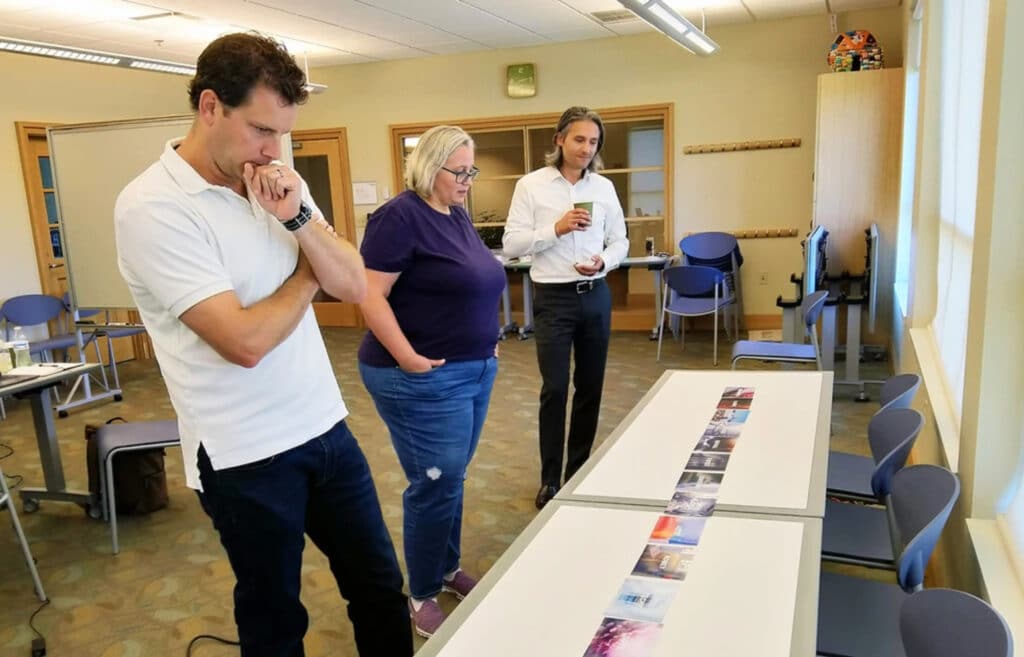
    We recently spent time with Jon Cameron and Sarah Bianchi from the Parkside Church Communications Team. The goal: to brainstorm and strategize for an upcoming website redesign. We’ve been partnering with Parkside for close to six years now. So this isn’t the first time we’ve visited them on site. But as we kick off a new project together, this on-site discovery meeting was as invaluable as it was with the first project.

    Let’s look at a few of the reasons why an on-site discovery meeting is such an important part of our process:

    On-site discovery provides an opportunity for stakeholders to come together and spend focused time on the upcoming project

    Clients usually have day-to-day responsibilities competing with new projects for attention. This can make it hard for them to give a new project the attention it needs to get started well. Scheduling an on-site brings together stakeholders from both the client organization and our team for focused workshop sessions.

    Setting apart this time and having the time and the capacity to focus on a project with an outside group actually helps us gain some new perspective. And it gives us the opportunity to think about our site in a way that—because we’re so entrenched in our own understanding of what our site needs to do—we are not able to bring an outside perspective. So it’s really helpful to have the Agathon team on site for that.

    Sarah Bianchi, Project Manager & Graphic Designer, Parkside Church

    It allows us to work through various discovery exercises together

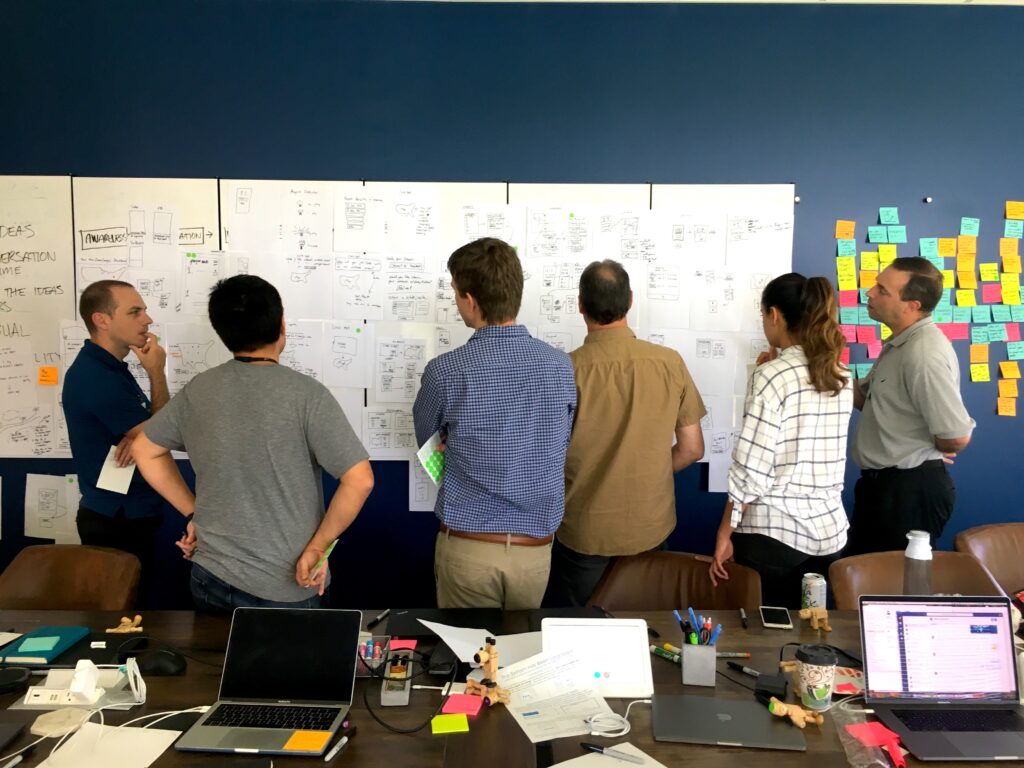
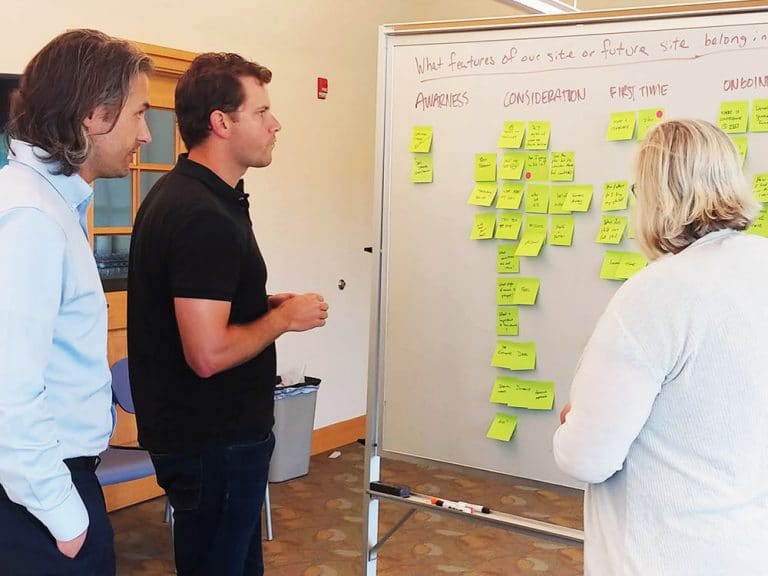
    Discovery often involves creating an empathy map, reviewing user personas, or refining a mood board. Whichever exercises we use, spending time in person and working through them together helps clarify and refine the vision for the project. Many also have a physicality to them—we’re arranging stickies on a wall or sketching wireframe concepts on paper. Sure, there are remote tools to help with these exercises. But in our experience, they just aren’t the same.

    It helps us share objectives, goals, and values at a deeper level

    Our team is fully remote. We believe you can communicate effectively even from a distance using tools like Slack, Google Meet, Basecamp, and email. But spending a day or two together in person allows for a deeper understanding than these asynchronous tools allow. While something like Google Meet or Zoom allows for a concurrent conversation, those calls tend to lack the quantity of time an in-person meetings allows for.

    This time together isn’t just about discussing goals and to-do lists for the project. It also gives us an intimate insight into what makes the organization tick. This allows us to better encapsulate who they are in the design and development phase of the project.

    And interestingly, what happens when we spend time on site with Agathon is that they understand us better and they’re able to make that web experience much more indicative of who we are as people—what we’re like, what we care about, and what someone who wants to engage in Parkside can expect and what they can look forward to.

    Jon Cameron, Pastor of Communications, Parkside Church

    On-site discovery provides an opportunity for us to set priorities together

    Again, you can set priorities through phone calls. But meeting in person lets us deep dive into those priorities over the course of a couple days. Together we identify primary, secondary, and tertiary concerns. That ongoing conversation allows us to ask questions and offer feedback in real time until we all agree.

    It helps us determine next steps with the client

    The final stage of an on-site discovery meeting is to determine next steps. By this point, we have a clear understanding of the objectives, goals, and values an organization has. And together we’ve created a priority list we can all agree onIn most cases, the next step is a detailed proposal based on the decisions we’ve made together during the on-site. Once that’s done, we can create a detailed proposal for wireframes, prototypes, and other milestones.


    On-site discovery meetings provide the foundation for a successful project. They allow our team to come together with product owners and stakeholders from a client organization to clarify the vision and goals for a project. Together we can make decisions about the work through exercises that will impact the design, usability, and function of a website or app.