
Author: Ron Veenstra

  • A Look Inside Our 10+ Year Working Relationship With Truth For Life

    A Look Inside Our 10+ Year Working Relationship With Truth For Life

    Truth For Life is the teaching ministry of Alistair Begg, senior pastor at Parkside Church in Ohio. Over the past 10+ years, we’ve worked with Truth For Life on a number of specific projects—like developing their digital app and website. 

    But rather than focus on an outcome we’ve achieved with Truth For Life, we want to highlight how a long-term working relationship with Agathon takes shape. 

    We strive to provide the best digital experience for our users and Agathon has been an instrumental part in helping us work towards this goal. Agathon has a wide variety of skill sets that have been a great benefit to our organization. They consistently provide high quality work, help us think through larger projects, and can be trusted with the smallest details.

    Sarah Sharp Director of Digital Communications, Truth For Life

    Website and App Development From Humble Beginnings

    When Truth For Life first came to Agathon all those years ago, they needed help with a few smaller projects. These projects were so successful that neither party wanted the partnership to end—so it hasn’t! We have since worked together on a website overhaul and a new app.

    Recent Collaborations to Improve Truth For Life’s Digital Offerings

    Admirably, Truth For Life never rests on their laurels. Rather than set up their site and forget it, they are constantly on the lookout for improvements they can make to better serve their constituents and share the Word of God further. They want to raise the bar for how ministry happens online.

    That’s where Agathon has come alongside time and again. Here are some recent and ongoing initiatives we’ve spearheaded with Truth For Life: 

    • Unifying the app and website experiences. We’ve worked to match the two platforms aesthetically. But we’ve also taken a holistic view of the user experience. Now, users can manage their accounts and save content on the app and website seamlessly. 
    • Recognizing and appreciating their recurring donors. Generous, consistent donors are the backbone of many ministries. We’ve worked hard to ensure Truth For Life’s loyal supporters have access to special content as a thank-you for their donations. 
    • Optimizing the overall user journey. It’s critical that users easily get from one piece of related content to another, to help them engage and go deeper in Truth For Life’s Godly offerings. 
    • Upgrading software and servers. Security is one of those tedious yet imperative tasks Agathon has taken on for Truth For Life, in partnership with other vendors. Ensuring their software is up-to-date matters to managing their constituent’s information and keeping their platforms modern and safe. 
    • Coordinating projects with Truth For Life developers. Our team has become an extension of the Truth For Life team—and we’re honored by this role. We are always happy to guide and oversee development projects, participating onsite in annual planning and then working hand-in-hand with their internal dev team, as needed. 

    The variety of services we’ve been able to offer Truth For Life has spanned strategy, design, development, maintenance, and security and covers everything from routine updates to tremendously challenging puzzles. Again, we are proud to be an extension of their team and provide support to their important mission. We plan to continue our cherished relationship with Truth For Life for as long as possible. 

    As we have worked with Agathon, we have seen a 41% increase in web traffic and a 150% increase in donors attributed to our website and app over the years. I cannot recommend them highly enough.

    Sarah Sharp Director of Digital Communications, Truth For Life

    We welcome the opportunity to work with other ministries on an ongoing basis to support any and all of your digital projects. Please get in touch!

  • How Agathon’s App for EveryCampus Powered Prayer Across 4,234 College Campuses

    How Agathon’s App for EveryCampus Powered Prayer Across 4,234 College Campuses

    Summary—Agathon’s Discovery, UX Design, and Development Work for EveryCampus 

    EveryCampus—a ministry with the ambitious goal of covering every campus across the U.S. with prayer by the end of 2020—came to Agathon in need of a digital app to guide students on a “prayer walk.”

    Agathon was tasked with preliminary user experience (UX) work. But because the UX work was such a success, EveryCampus asked our team to do the design and dev work for their app, too. The app is user-friendly and engaging, enabling students to virtually or physically participate in the “prayer walk.” 

    Powered by the app, EveryCampus was able to reach their goal. They covered all 4,234 college campuses nationwide in prayer by May 2020—ahead of schedule.

    I love to see how well Agathon works with others—you guys are team players. Agathon has been a rock: Alan still checks in, Rachel is our primary contact, Luke’s been there from the beginning, and Kedron’s elbow-deep in everything.

    Mark W. Breneman Digital Product Manager, EveryCampus

    In the Weeds—a Holistic Look at the EveryCampus Partnership 

    The Client: EveryCampus Fosters Prayer Among Young Adults    

    EveryCampus is a collaborative initiative with a noble mission: to make the gospel available—through prayer communities—on every college and university campus in America. 

    When EveryCampus approached Agathon, they had the ambitious goal of covering every campus in the U.S. with prayer by the end of 2020. It started as a shared vision between Cru and InterVarsity. Over time, the initiative expanded to embrace dozens of partner organizations all working to reach every campus in the United States. 

    The Challenge: De-Siloing Campus Ministries to Plan a Unified App   

    For the first phase of their initiative to imbue prayer on campuses, EveryCampus envisioned an app that would guide users—the students—through a physical “prayer walk” on the campuses. 

    As a joint venture, each of the dozens of organizations had its own in-house development staff. But in the spirit of equal partners, they decided to hire neutral outside agencies all working together to assist with bringing their shared vision to life by helping with UX, development, data analysis, and marketing.

    There were a lot of moving parts, so the challenge was figuring out exactly how to bring the vision to fruition while fairly involving each ministry. 

    The Ask: Agathon’s Growing Role—From UX Research to Development 

    Agathon is an integrated agency and was initially asked to assist with the strategy, specifically around UX. Because the UX work went so well, we were also tasked with design and development.

    The Scope: How and What the Client Received to Reach Success

    As with most of our projects, we started with a Discovery phase. Agathon walked the EveryCampus team—including key stakeholders and decision makers—through a series of exercises to help them create: 

    Because this project was initially a joint effort between independent organizations, there were many stakeholders with diverse visions. And yet, Agathon was able to get everyone on the same page and aligned around the same goals thanks to our exclusive Discovery exercises. 

    Before we began building the prayer walk app itself, we used the personas to guide the UX. The Agathon team asked and answered questions around which features were beneficial for the end user. From there, we created a user interface (UI) focused on the user’s needs. Agathon removed distractions and unnecessary items from the UI of the app to keep users focused on the main goal: communal prayer.

    Collaborating with other agencies for the backend data, we then built the app that incorporated the frontend UI with the backend data.

    The Pandemic: EveryCampus and Agathon Pivot—Without Missing a Beat 

    This entire project was based on people going to campuses near them and physically walking around to pray. When COVID-19 shut everything down, the EveryCampus team demonstrated a clear vision by quickly developing a virtual prayer walk alternative. 

    The Agathon team was once again able to strategize with EveryCampus and make decisions on how best to implement the app—despite the necessary pivot to virtual. 

    The Results: Reviewing Project Wins 

    • Guiding personas. The creation of personas guided every decision, giving project leaders a way to present their case to leadership around a unified goal.
    • Interactive prayer walk guide. We took a detailed prayer walk guide (with more than 50 steps!) and distilled it into a user-friendly interface that incorporates imagery in place of text where appropriate and keeps users engaged.
    • Pivoting during a pandemic. When COVID-19 restrictions began impacting in-person ministry, we worked with the EveryCampus team to adjust their strategy and vision. In the end, they decided on a short-term pivot, providing options for a virtual prayer walk while still looking ahead to the return of in-person ministry opportunities.
    • Covering every campus in prayer. EveryCampus launched on December 20, 2018. By May 14, 2020, all 4,234 college campuses in the United States had been covered in prayer, despite the challenges the COVID-19 pandemic presented.

    On to the Next Goal—Agathon’s Partnership With EveryCampus Continues 

    EveryCampus is looking forward to their next milestone: fostering gospel movements on each of those college and university campuses by 2030. They will enable this by engaging the people in local churches and communities in campus ministry, whether that’s supporting existing ministries or starting new ones.

    We’re excited to continue our work with them in this next phase of their organizational vision.

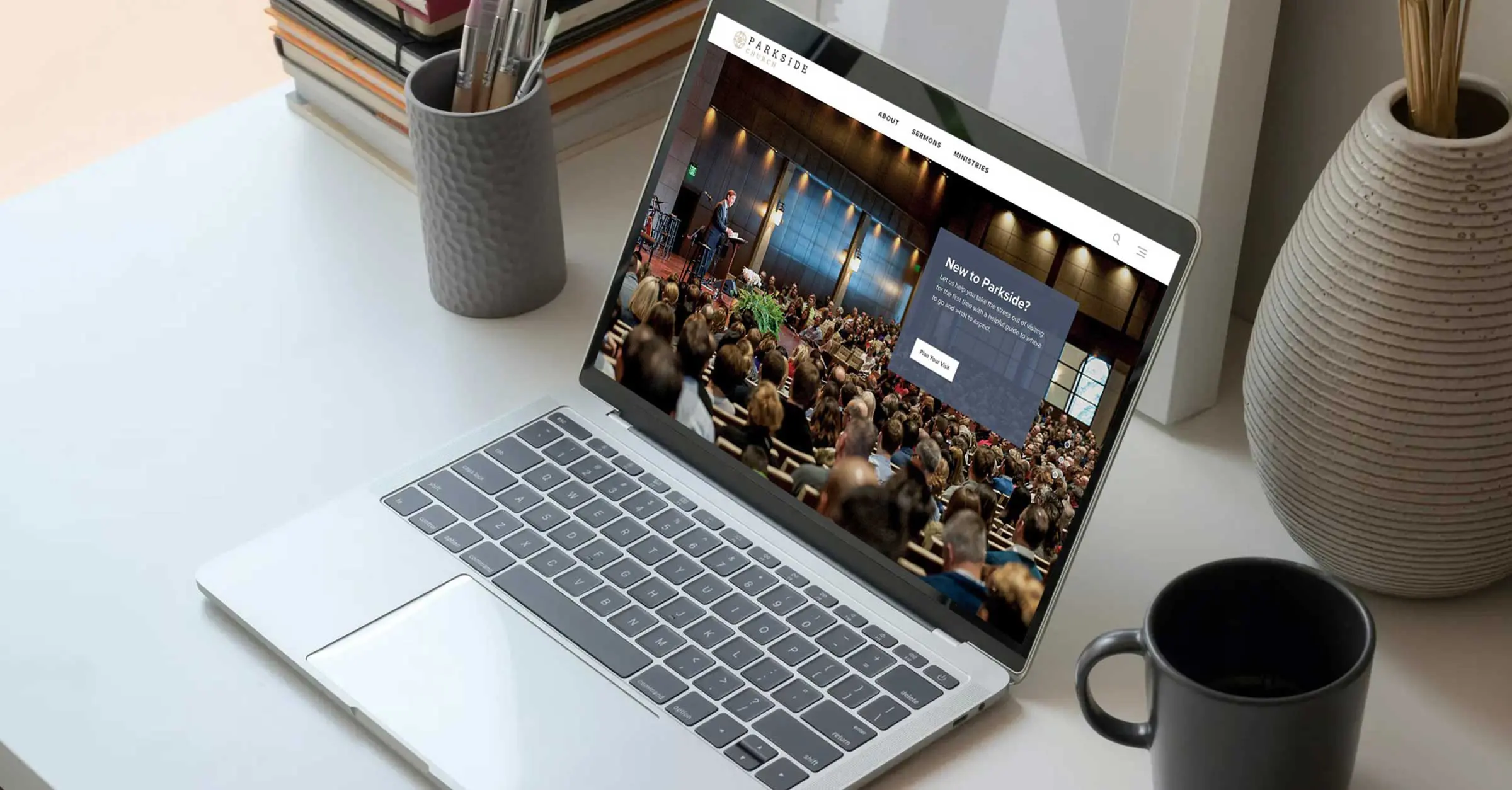
  • Website Development for Parkside Church

    Website Development for Parkside Church

    The Challenge

    Parkside Church is a complex organization, with many diverse ministries serving people in the Cleveland area. Their website was correspondingly complex.

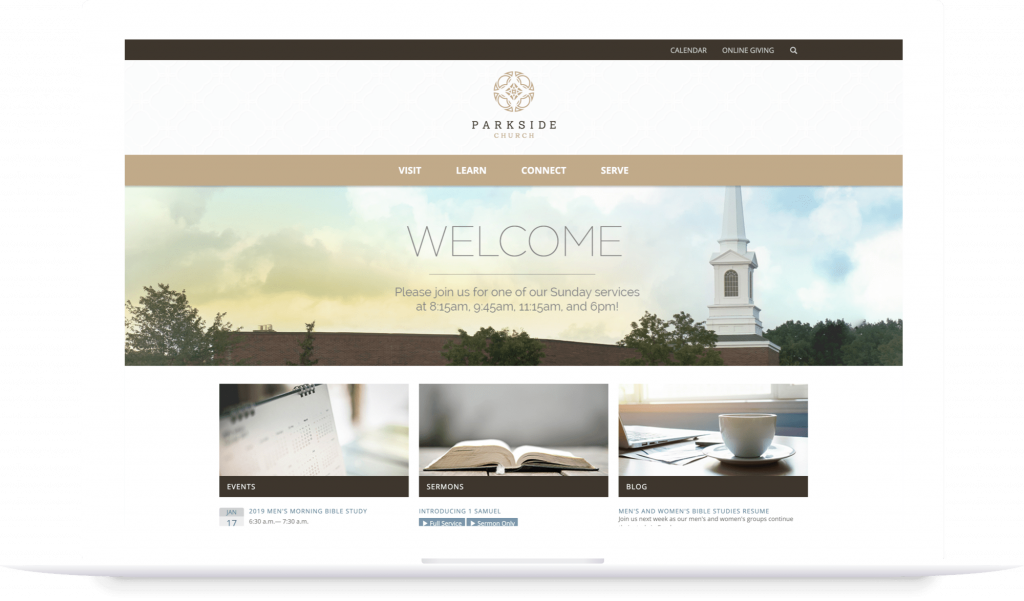
    In their attempts to serve everyone from employees to attendees, Parkside Church had layered content onto their site in a way that had become cumbersome and overwhelming over the years. Because of that, updating the site became challenging, and the site’s visual design was no longer consistent with their offline presence.

    Agathon was already serving Parkside Church through providing cloud hosting and web support services. With that foundation of trust, they reached out to us first when it was time to refresh their website.

    One of the things we’ve been looking for is to be able to trust in the group that we work with. So that team needs to be competent, and Agathon is. And the team needs to be able to understand our needs, and Agathon does. They do their best to sit with us and get to the bottom of a problem and really work that through with us.

    Jonathan Cameron Pastor of Communications, Parkside Church

    The Process

    Parkside Church knew their website needed streamlining to better serve the needs of each of their users. Our job was to help them recognize and empathize with these needs.

    We began the Strategy process by conducting a Discovery session. Over the course of several days of onsite meetings, we collaborated with the Parkside Church team to build five personas that served as sample website users. Then, we worked together to map out each persona’s journey through the site. Using this new perspective, the team went through a card-sorting exercise to reorganize the website’s existing content to fit each persona’s needs.

    This user-centered approach led to two key insights.

    The existing website content was valuable, but needed to be reorganized to serve its users.

    In looking at their website through the lens of their users, the Parkside Church team found new patterns in their existing content. This allowed them to reorganize everything from seven main navigation items down to four: Visit, Learn, Connect, and Serve.

    This approach addressed a particular barrier for new attendees, who had struggled with what to expect on their first visit.

    Users needed new site functionality to connect with the content they wanted in an efficient and effective way.

    Parkside Church’s website redesign needed to pivot to be mobile first, as the site’s mobile traffic was on the rise. It also needed a more functional events and ministry calendar that allowed users to browse events by week and month, or specific ministry.

    How It Worked

    Because Parkside Church understood the importance of empathizing with their users while redesigning their website, we were able to work together to research, design, and build an end product that serves everyone more effectively. As a result, the new website helped Parkside Church’s pageviews grow by 38% and new users to the site grow by nearly 50%.

    The new Parkside Church website also provides users with the following:

    • A user-focused and mobile-first experience.
    • Simplified navigation so everyone can find what they’re looking for quickly.
    • Easily discovered content that helps new attendees feel ready for their first-time visit.
    • Functionality that enables all users to easily find the event information that’s relevant to them.
    • A visual design that reflects the offline experience of the church.

    Parkside Church is best positioned to understand whom they serve. Our role was to help them apply what they do so well offline to their digital presence. By focusing on their users’ interests, we were able to help them feel confident about making these significant and necessary changes.

    We worked together to build a website that serves all of Parkside Church’s stakeholders simply and effectively.

  • How Agathon’s App for Truth For Life Spreads Bible Teachings to More Than 300,000 Users

    How Agathon’s App for Truth For Life Spreads Bible Teachings to More Than 300,000 Users

    Summary—Sharing 30 Years of Sermons Through a User-Friendly App    

    Bible-teaching ministry Truth For Life, a nonprofit rooted in radio content, had three decades of sermon archives they wanted to make available to their followers via a robust mobile app.

    Other agencies had already failed to execute Truth For Life’s vision for the app, so the organization approached Agathon. Fortunately, we already had a trusting, fruitful partnership with Truth For Life. We were able to lean on and grow this partnership through the development of the groundbreaking new app. 

    In the end, we successfully launched the app, which includes not only the decades-worth of archived sermons, but also daily devotionals, bible readings, and radio programming. 

    Thanks to details like rich search functionality and built-in push notifications, the app is more user friendly than ever. And for Truth For Life, user accounts are integrated across the app and mobile site, which means integrated, actionable user data to authentically connect with their constituents.

    In the Weeds—Our Soup to Nuts Approach to App Dev for Truth For Life

    The Client: Truth For Life Aims to Evangelize in the Digital Age

    Truth For Life is the teaching ministry of Alistair Begg, senior pastor at Parkside Church near Cleveland, Ohio. Begg has been in pastoral ministry since 1975. Considering his decades of preaching, the organization had countless hours of Bible-based teaching to share with both new and established followers. 

    The Challenge: 24/7 Bible Access From Any Device for Over 300,000 Users

    In addition to making their sermons accessible to their followers, Truth For Life wanted to make Alistair Begg’s daily radio program as well as daily devotional and Bible readings widely available for their audience to access whenever it suited them. 

    Specifically, the mobile app needed to: 

    • Give users the ability to search, browse, share, and listen to Truth For Life’s large body of content. 
    • Integrate seamlessly with the ministry’s website, connecting user profiles in both places. 
    • Have a date-based component to support the timeliness of the content.

    It was a tall order. And the ministry’s existing apps made the project even more complex. One of their existing apps was built from a template with limited functionality and basic integrations. And then, the ministry had a completely separate app dedicated to their daily devotional. With more than 300,000 users already on these platforms, they were quickly outgrowing the current apps’ clearly narrow capabilities.

    The Ask: Further Truth For Life’s Mission Through a Unified App

    As mentioned, we had previously worked with Truth For Life on system administration, web hosting, and website redesigns. Based on the strength of our relationship and the success of these past projects together, Truth For Life decided to trust the Agathon team with this high stakes new endeavor. 

    Their overarching goal? Spread their mission of “teach[ing] the Bible with clarity and relevance.” 

    The Scope: Strategy, Design, Development, and Deployment for Truth For Life

    Because Truth For Life already had that legacy mobile app with hundreds of thousands of existing users, we had to release an initial version of the updated app packed full of all the features these users had come to expect.

    To kick off the project, we spent an intensive day talking strategy with the Truth For Life team in their Cleveland-area offices. We reviewed their list of proposed new features and brainstormed what the ideal mobile app would look like—through the lens of their users. We created a product roadmap that very day, and we used it to inform the design by way of visual mockups.

    Halfway through the development process, we took a brief step back from the active work and weekly meetings with the Truth For Life team. We needed to see the forest—not the trees—and ensure we were building the mobile app we’d described in the beginning. The results of our reset? We saw we were on nearly the same path as that first day, confirming the rock-solid work we’d done in crafting our vision together.

    We pressed on. And with each line of code and new iteration of the app, we stayed focused on our initial vision and design. We sent new versions of the app to the Truth For Life team every two weeks for testing. We started with a handful of internal stakeholders and grew that test team to 15-20 people as we got closer to launch. Incorporating feedback from a diverse team along the way was a major project management feat. We credit this process for the resulting strong mobile app everyone believed in.

    The Results: User Experience, Reinvented 

    Truth For Life’s revamped mobile app improved on their old product and includes additional key features:

    • User accounts are integrated across the website and mobile app. This allows users to do things like “favorite” sermons, with preferences that are saved across both platforms. User account integration also provides Truth For Life with integrated data. This gives the ministry a better sense of who is using the app, allowing them to build stronger relationships with their users.
    • Design and user experience are consistent with the website. The new app’s organization aligns almost directly with the website for a seamless user experience.
    • The new app includes an improved media player experience. The richer media player allows users to listen to audio content while browsing the app. This is hugely important for an organization with so much audio content.
    • Each sermon’s audio and video components are accessible in the app. Users with disabilities aren’t limited in the content they can access. 
    • A complete Bible text accompanies the app’s daily devotional. Using the full Bible feature, users can click to see each Bible verse referenced in the daily devotional. A one-year Bible reading plan, complete with verses for each day, is also included in the app.
    • Rich search functionality allows users to filter based on content type. Because of the search they’d built on their website, Truth For Life knew users enjoyed being able to conduct searches for sermons, devotionals, etc.
    • The app has built-in push notifications and messaging that allows Truth For Life to connect with their users in a timely way. It also has an inbox that archives all messages from Truth For Life.
    • The new app was built in one platform that functions across iOS and Android devices as well as tablets. Using React Native, our team efficiently built a single app for all three platforms. This allows features to appear on all platforms at once and minimizes platform drift, where the app on one platform might diverge from the others over time.

    A Dynamic Tool Fit For a Dynamic Ministry 

    Truth For Life’s new mobile app allows the organization to teach the Bible in a fresh new way, with clear functionality and technology that’s relevant to their audience. It’s a dynamic tool that fully supports the ministry’s mission.

  • Development

    Development

    We build properties that help your ministry engage your users

    We’re skilled at adapting existing development environments as well as building custom applications that fit your needs. Whether your application lives on a server, in a browser, or on a mobile device, our team can help you launch your new ideas quickly on your platform.

    Agathon works with a variety of programming languages and platforms, allowing us to choose the technology that best serves your user needs, organizational goals, and your own capabilities. We will help you evaluate options, prioritize features, and create a timeline for the project. Using tools such as Jira and Confluence, you will have visibility into the work the development team is doing on a daily basis.

    Development work encompasses not just the code that is written to build the final product, but testing, deployment, and (if applicable) ongoing support.

    Development in depth

    No project is flawless, but you can count on us, as your partner, to be upfront and honest about any challenges we face while building your software. Our initial cost range estimates are often quite broad; however, we are able to narrow those estimates significantly based on the things we learn from the Discovery findings. As the project progresses, we may make adjustments to the scope (including adding, re-prioritizing, or deleting features) as we gain greater clarity about project needs. These decisions will always be made in partnership with you.

    Testing

    Developing your website or app is only part of the job, nor does it happen in a vacuum. Testing the product, both during development and in anticipation of launch, is a vital step in ensuring it functions properly and accomplishes the goals it was meant to accomplish. We do this through ongoing code reviews and a Continuous Integration (CI) approach, as well as acceptance testing and beta testing.

    Deployment

    When it’s time to deploy, there’s more to the process than flipping a switch. No matter the size or scope of a product, Agathon designs deployment procedures that ensure a regular, predictable launch—a successful launch.

    Development Outcomes and Deliverables

    Mobile App

    • Cross-platform app for iOS and Android
    • Accessible, intuitive user experience
    • Offline first approach and cloud enabled when appropriate

    Web App

    • Responsive across mobile, tablet, desktop
    • Accessible, intuitive user experience
    • Offline capabilities and automation when appropriate, and modern technologies,

    Both

    • All API integrations in place
    • Documentation and “the keys to the kingdom” so that you have full capabilities to interact with the product in any way you wish

    When we’ve set out to do projects, big or small, Agathon has met our expectations and our goals with excellence.

    Sarah Bianchi Project Manager, Parkside Church

    Case Study

    Truth For Life needed a reimagined mobile app to serve their hundreds of thousands of users. Agathon built it.

  • Design

    Design

    We bring your vision to life through design

    Conceptually, you know exactly what you need built. Whether Agathon ran your Strategy process or you managed that initial research in house, you have a defined vision for your project, clear justification for building it, and objective metrics for measuring its success. The next step is to start bringing that vision to life through the Design process.

    Design includes making a visually-pleasing product, but it’s so much more than that. We start with an unshakable focus on user experience (UX) and maintain that throughout the entirety of the Design process. (If we’re building out the project in the Development process, we vigorously preserve that UX focus throughout that process as well.) After all, a pretty but user-hostile product is a product that is destined to fail. We know that a product that embraces UX is one that your users will continue to use.

    During the Design process, we translate the insights from the Discovery phase of Strategy into wireframes, design systems, and blazing fast front-end and mobile user interfaces. This is done through several wireframe iterations to identify and address uncertainty early without getting caught up in the visual aesthetics. Everything we do during this process maps back to the work you have as a result of Discovery, focusing on your organizational goals and how to drive value between you and your users.

    Design in depth

    We begin by building out conceptual wireframes, which present the major concepts that need to be incorporated into the app as well as a high-level view of the user journey through the application. This is a highly collaborative process with a lot of conversation between designers, developers, and the client about how the app can and should work.

    Conceptual Wireframes

    Once a rough skeleton has been agreed upon, we transition to information wireframes, where we begin to layer actual data onto the design. This is still a rough wireframe (often starting as a marker sketch). But once the work begins to take shape, we’ll transition to a clickable prototype in InVision. This prototype allows stakeholders to begin testing the user interface (UI). If we find that there are areas of concerns or confusion, we’ll begin running usability tests at this stage.

    Information Wireframes

    From here, we move on to interaction wireframes. This process focuses on the actual interactivity of the app, so the prototype itself is still low fidelity.

    Interaction Wireframes

    Once the wireframes are headed in the right direction—even if they’re not done yet—we’ll begin exploring the visual direction. We’ll use existing design and branding guidelines throughout this process if those already exist. If not, we will do a competitive analysis to identify visual elements that anchor the project within your market/context and build from there.

    Visual Design

    Development often starts once the conceptual wireframes are done. The design can be layered over the coding (and the coding often informs the design), so we don’t wait to start building.

    Design Outcomes and Deliverables

    • Conceptual wireframe, from which Development can begin
    • Other low-fidelity wireframes to describe data flow and key user interactions
    • High-fidelity wireframes that incorporate existing design and branding elements (if available) into the previous wireframes
    Strategy poster

    User Experience

    • User Research
    • Persona Development
    • Journey Mapping
    • Wireframes
    UI poster

    User Interface Design

    • Product Branding
    • Visual Design
    • Usability Testing
    • Front-end Implementation
    Mobile poster

    Mobile Design

    • iOS & Android
    • Web Apps
    • Responsive Design
    • Mobile First

    Agathon is an exceptional company to work with. The input and experience they bring to the table throughout are invaluable. They take care along the way to ensure the end product is truly what we need and are excellent at keeping the communication channels open.

    Margaret Fry Director of IT Resources, Christian Happenings

  • Strategy

    Strategy

    We capture your vision and help define success.

    A core component of any successful project is understanding the complete landscape in which that project will exist. This includes analyzing organizational strengths and weaknesses, understanding the present and future market, and researching your users’ wants and needs. Agathon goes further to help your organization develop a digital strategy and determine how your project helps contribute to that strategy’s success.

    Discovery: framing the problem

    A discovery session is a deep dive into understanding your organizational goals and user goals to discover where those align. We bring a fresh set of eyes plus tools and methods that help you see your challenges in new ways. This isn’t simply a chance to collect a list of requirements for an upcoming project. Instead, it’s a necessary part of the process to define what the project ought to be in the first place. We will help you frame your challenge through a user-centered approach, mining your unique knowledge of your users and identifying opportunities to serve them better while moving your organization toward its goals.

    What does discovery look like?

    A discovery session is a multi-day, hands-on, face-to-face working collaboration to discover what will be meaningful for both your end users and your organization—and where those opportunities overlap. We also help you discover new and overlooked opportunities with an eye toward both the immediate and longer-term future. We work with you on user journey maps, personas, and similar exercises that establish a foundational understanding of where you’re going and how to successfully get there. If that all sounds foreign and daunting, don’t worry! We are careful to guide you through the process to ensure that, by the end, we’re all working from the same map.

    This session can stand alone as an opportunity to strategize for the future before embarking on projects internally. Or it can naturally transition into additional phases of work with Agathon. We abhor vendor lock-in, and you’re free to use the output from our discovery session however you wish. Our hope, however, is that we’ll be able to put that same expertise to work to help you turn the resulting vision into a reality.

    Strategy: not a “one and done”

    Discovery is one facet of Strategy, but there’s much more to the story. We employ a number of other tools as part of our overall Strategy services. We use tools like User Research, Opportunity Assessments, and Market Research during Discovery—and sometimes even prior to that—to establish goals and opportunities. But we also use those tools throughout a project, constantly checking in to ensure that we do not stray from the path, and that the path has not changed in the meantime!

    Imagine if you discovered your users’ goals in Q1 of 2020 for a product launch in September… and then never revisited those goals in light of a landscape that changed entirely by summer’s end. We treat Strategy as a continuous part of a successful project to ensure all of our assumptions and findings remain valid along every step of the project’s life cycle.

    Strategy Outcomes and Deliverables

    • Team alignment around goals, features, and outcomes
    • Key personas, use cases, and context scenarios
    • A road map for an initial launch and for future iterations
    • Metrics that help define success and the means to measure it

    Our ministry is grateful for the Agathon team’s expertise and professionalism. Their partnership has been invaluable in helping us reach our digital audience through our website.

    Stephanie Anderson Communications and Graphic Specialist, Eternal Perspective Ministries